History of Paroa Station
The story of our land, our tūpuna, and the vision that brought Paroa Trust into being in 1959.
This page brings together two strands of our story. The first is Whakapapa, the ancestral lines that connect Ngāti Paroa to Kahungunu and establish our mana whenua in the Mōhaka region. The second is Te Whenua, the modern history of how Crown land acquisition, decades of effort, and the vision of our kaumātua led to the formation of Paroa Trust in 1959.
Use the tabs below to move between these two parts of our kōrero.
Our Origins
Paroa Station is named after the tupuna Paroa, of Ngāti Paroa hapū within Ngāti Pāhauwera. Paroa was a descendant of Kaukohea, the eldest son of Rakaipaaka. Kaukohea married Mawete and Turipo, the twin daughters of Tamahenga of Ngāti Porou. The children of Kaukohea to Mawete include Tutekanao, Kurahikakawa and Mamangu. Paroa inherited his land rights from his tupuna Mamangu.
“Ngāti Paroa is one of the hapū having mana whenua in the Waipapa Block. Some of the principal persons are Hira Whakapinga, Hipora Iwi Katoa, Para Turi, Tiopira Konohiwhero, Tirita Kaumātua and Arapera Te Aho. These are all Ngāti Paroa tūpuna.”– Wi Te Kahu, giving testimony before the court
Whakapapa – Principal Line of Descent
From Kahungunu to the descendants of Tama i TohukuraKahungunu / Rakaipaaka / Kaukohea (m. Mawete) / Mamangu / Paroa (m. Hinemanehua) / Ngarangituhouora / Rerewai te Rangi / Ngarue / Tama i Tohukura
From Tama i Tohukura:
Matana
Te Arakaikino
Rori (m. Menemene)
Kere Waihape (m. Kararaina)
Tiopira Konohiwhero
Hipora Iwi Katoa
Matenga Te Aohia
Kararaina, wife of Kere Waihape, was also a descendant of Paroa and half-sister to Hipora Iwi Katoa. Tirita Kaumātua was a full sister of Tiopira Konohiwhero. Para Turi was their half-sister (no issue). Tirita married Eriha Kaumātua. They are the tūpuna of the Eriha whānau and Matana whānau. The name Tio in Tiopira was anglicised; some descendants are now referred to as the Joe whānau (e.g. Ramon Joe).
Whakapapa – Kurahikakawa / Paroa Te Huatu Line
Parallel descent through KurahikakawaKurahikakawa / Paroa Te Huatu
Parallel Generations:
Tumata (m. Te Rua) | Paroa
Hinewaka | Hinemanehua
Moko | Ngarangituhouora
Kahotara | Rerewaiterangi
Tapoko | Tihe (m. Taumuhu)
Matenga Te Aohia | Ateanuku | Kaiho
Ropine | Hona Te Waha | Koari
Makere | Hira Te Whakapinga | Ketura | Atareta Paruparu
Ketia Paratene | Tiopira Konohiwhero | Hipora Iwi Katoa
Awhina Waaka | Ketia Paratene (m. Pokia Tiopira)
Toro Waaka | Awhina Waaka
The Ngāti Paroa whānau are also Ngāi Te Rau, Ngāti Kurahikakawa and Ngāi Te Ao Kapiti. Ngāti Paroa also had land interests in Putere, one of their hua manu (bird hunting areas).
A considerable part of Paroa Station also covers the traditional lands of Ngāti Tuhemata and other hapū. The Crown’s Consolidation Act and Māori Development Act saw these lands carved up and reallocated to Māori without regard for hapū or iwi affiliation to the land.
Connected Whānau Lines
Three further lines of whakapapa connect our whānau through parallel descent from Rakaipaaka and Turamakino. Select a line below to expand.
1. Wainohu Hodges Whānau & Others
Rakaipaaka (m. Turamakino) / Mawete (m. Kokohea) / Tu Te Kanao (m. Tamatea Hirau) / Tureia (m. Hinekimihanga) / Te Huki (m. Te Rangi Tohu Maire) / Puruaute (m. Te Matekainga)
2. Kainamu, Eriha, Waaka Whānau & Others
Rakaipaaka (m. Turamakino) / Mawete (m. Kokehea) / Tu Te Kanao (m. Tamatea Hirau) / Tureia (m. Hinekimihanga) / Te Huki (m. Te Ropuhina) / Te Rehu (m. Katea) / Te Wairua Ngaroa (m. Te Aweawe) / Tamarae (m. Whakino) / Pukehai (m. Kurae) / Hopa Te Mano (m. Miriama Pukehai) / Hemi Kainamu (m. Tepora Temano) / Ngaranoa Kainamu (m. Robert Findlay) / Miriama Findlay (m. James McDonnell)
3. Descendants of Raiha Keefe
Rakaipaaka (m. Turamakino) / Pokia (m. Kuranui) / Te Tahinga (m. Te Hihipa) / Te Rangihakahaka (m. Haerengarangi) / Te Manutai (m. Hineahu) / Katonga (m. Hoataua) / Takuputai (m. Te Whakaanga) / Torea (m. Te Ruati) / Te Kauaha (m. Te Whiriaita) / Pita Koterewai (m. Toto Te Mau) / Hachem Schmidt (m. Tauarai Te Mau) / John Smith (m. Raiha Keefe) / Mereana Smith (m. William Walker Hawkins) / Olive Hawkins (m. Archie McDonnell) / James McDonnell (m. Miriama Findlay)
From Crown Acquisition to Consolidation
Following the McLean purchase, most Māori-owned land south of the Mōhaka River fell into Crown ownership. Much is written about land acquisition north of the Mōhaka, particularly the sale of the Mōhaka and Waihua Blocks, with instances of land being taken without compensation due to survey error, deceit, and other reasons. History records land sales to settlers at ten times what Māori owners had agreed to before receiving payment from the Crown. Further controversy surrounded the Crown’s Consolidation Act and Māori Development Act, which saw land blocks carved up and reallocated to Māori without regard for hapū or iwi affiliation.
Under the Āpirana Ngata land development scheme, several small landowners worked their holdings as dairy or sheep and beef farms. Most failed due to lack of scale and unsustainability. Many were forced to find work locally, on railways, roads, and farms, to keep families and service mortgages and loans.
Largely through the vision of Wairoa kaumātua Sir Turi Carroll, supported by Paora Rerepu, Wiki Hapeta, Irene Stuart, and Dottie Winiata among others, 45 to 50 owners of what would become 20 consolidated blocks (totalling 2,813 acres at formation; now registered as over 1,700 ha, Mohaka C12) met at Jim Adsett’s picture hall on 13 August 1958 to discuss consolidation with Department of Māori Affairs staff.
A further meeting at the Raupunga Memorial Hall on 12 July 1959 saw block numbers grow to 21, with a combined government valuation of £20,000 (equivalent to $40,000 at the time of decimalisation). An interim management committee was elected: Henry Kupa, Girlie Wainohu (Secretary), John Wainohu, Jim Eriha, Wiki Hapeta, AT Carroll (Chair), Paul Lemuel, Bill Te Kahu, Wi Keefe, Irene Stuart, and Tu Pera. On 15 October 1959, the Māori Land Court at Wairoa amalgamated 20 blocks under the title Mōhaka C9, cancelling all existing titles. Paroa Trust was born.
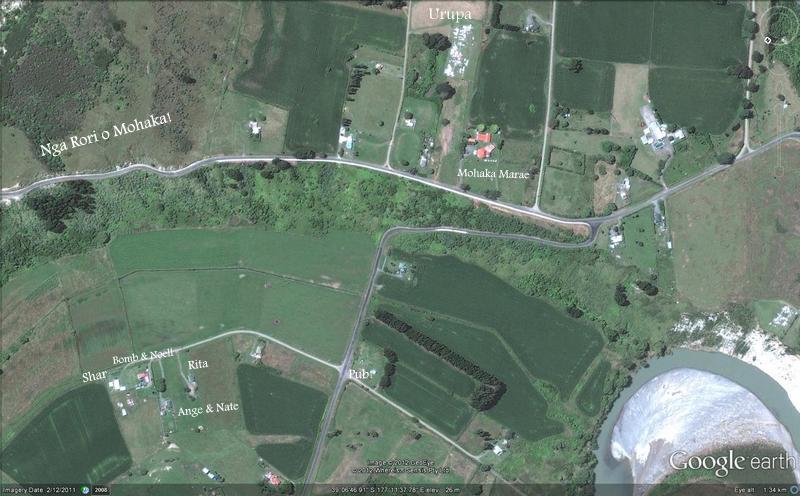
Tawhirirangi the sacred mountain, Mōhaka the river, flowing to the sea, the mountains resound inland, Ngāti PāhauweraTawhirirangi te maunga tapu, ko Mōhaka te awa, tangitū ki te moana, maunga haruru ki uta, ko Ngāti Pāhauwera te iwi.